Today as the entry point
I brought workout, activity, nutrition, recovery, and the next useful action into one view so the user can understand the day before deciding where to go deeper.
Independent product / 2026
A fitness app where real training powers an RPG
I designed and built a fitness app where workouts, activity, nutrition, and recovery shape companion growth and battles.
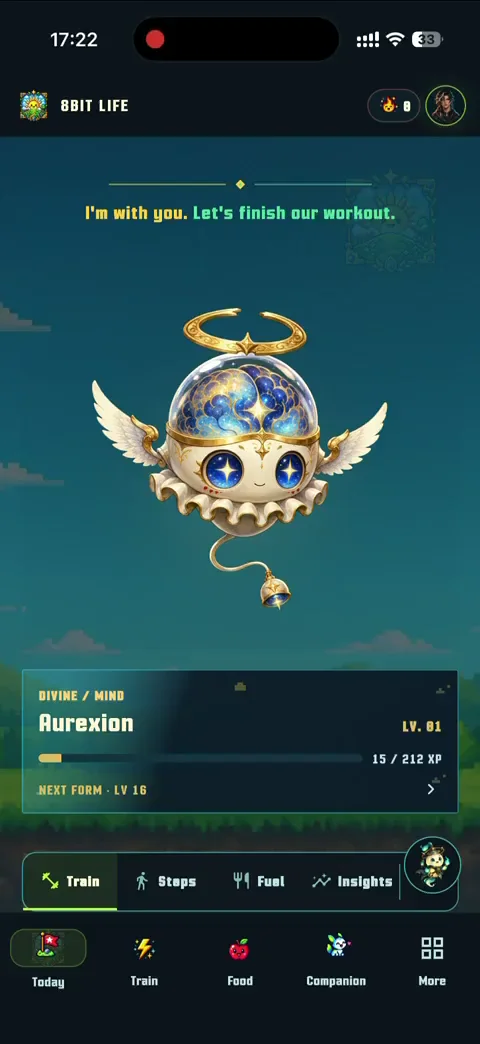

I wanted fitness progress to have a second life beyond charts and streaks. But combining a practical fitness tool with an RPG creates a tension: if the game appears inside every health flow, logging becomes slower; if it sits too far away, the connection to real activity stops feeling meaningful.
The fitness app should still make sense if the game disappeared. Workouts, activity, meals, and recovery stay familiar and useful on their own. The RPG reacts to those actions instead of interrupting them.
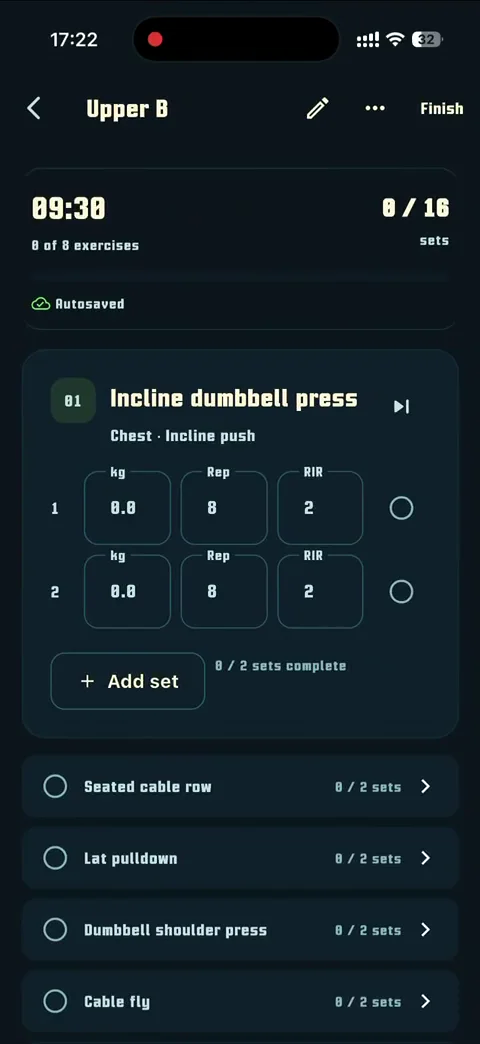
The most frequent actions had to stay close to familiar fitness patterns. Starting a workout, checking activity, logging food, or reviewing recovery should not require understanding the RPG first.
The game reacts to the fitness app, not the other way around. People log and review health information through familiar tools first; RepQuest then translates it into XP, mastery stats, and battle readiness.
I brought workout, activity, nutrition, recovery, and the next useful action into one view so the user can understand the day before deciding where to go deeper.
Set and rep logging, rest timing, and workout history stay focused on the session itself. Game progression happens around the workout rather than competing for attention during it.
Steps, workouts, and active energy come from Apple Health, so movement can contribute to RepQuest without turning every activity into another manual logging task.
Meals, calories, protein, and macros remain standard fitness information instead of being rewritten entirely as game stats. The screen needs to be useful on its own.
The companion is where the two systems meet. Fitness activity becomes visible as XP, mastery, and team progress after the underlying health actions have already made sense on their own.
A single XP bar would make “do more” the dominant strategy. I split progression across Power, Agility, Recovery, and Focus so different parts of fitness can matter without pretending they are the same thing.

The baseline form before training begins to change the companion.
Starter form
The first evolution rewards accumulated progress without requiring a specific training style.
Unlocks at level 16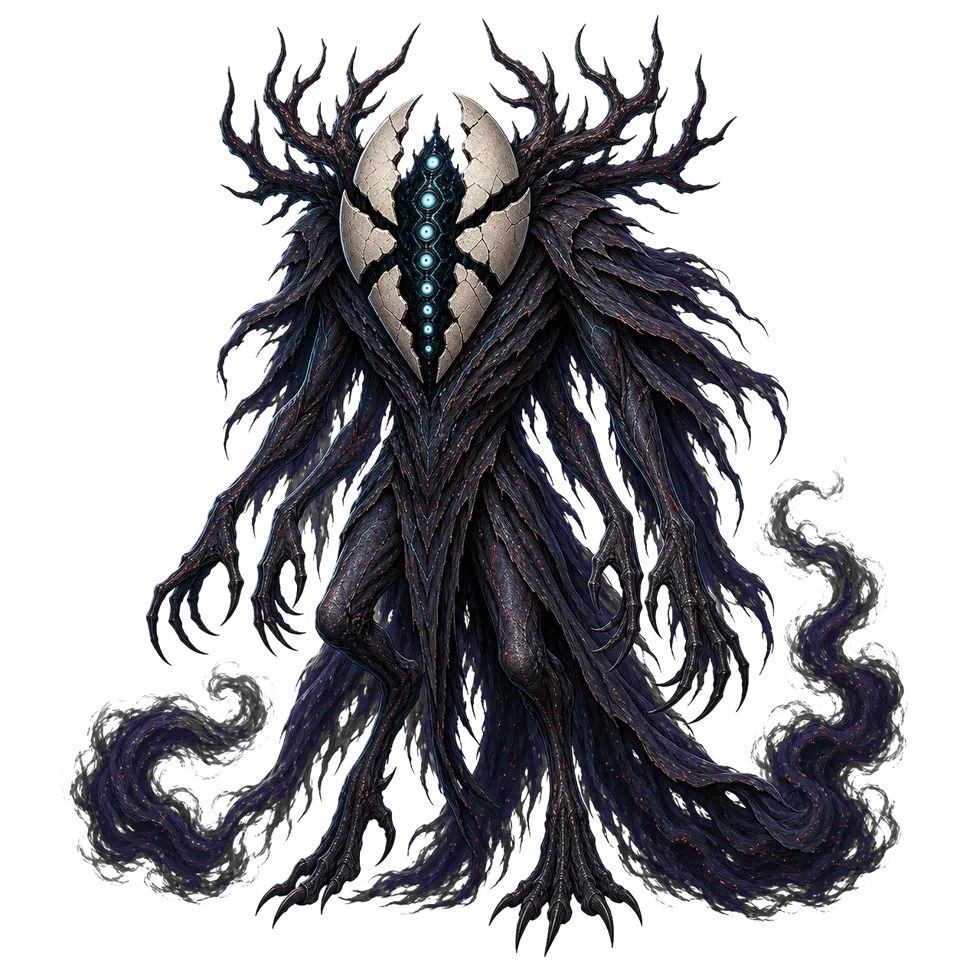
The final level-based evolution keeps the main progression path understandable and predictable.
Unlocks at level 36
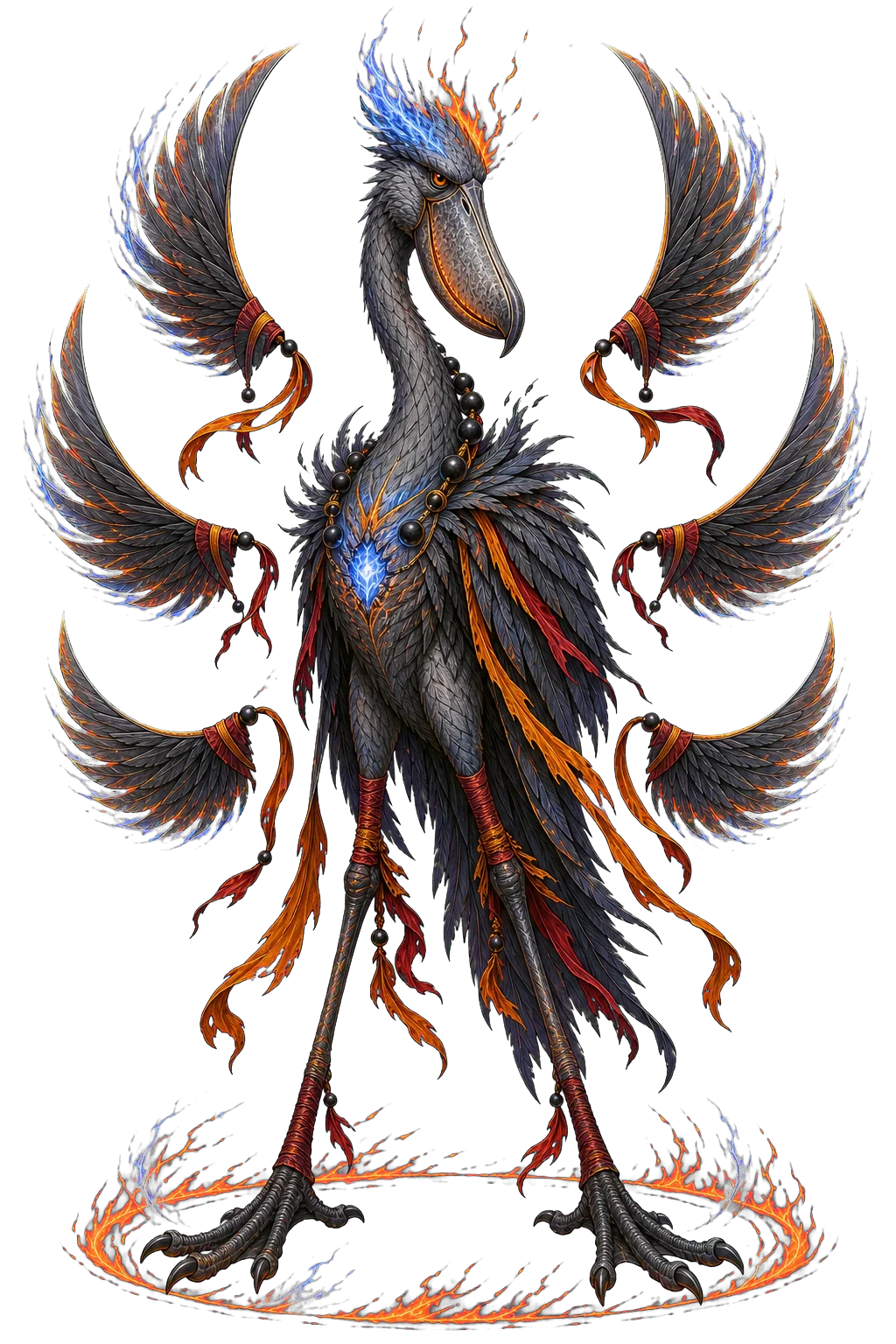
The end state is different: it requires balanced mastery instead of simply earning more XP.
Power, Agility, Recovery, FocusThe endgame rewards balance, not just volume. Levels give the player a clear progression path, while the Divine form asks them to develop Power, Agility, Recovery, and Focus together.
I did not want the reward for exercising to be another badge. The RPG is a separate play space where accumulated progress becomes decisions through abilities, team composition, and campaign routes.
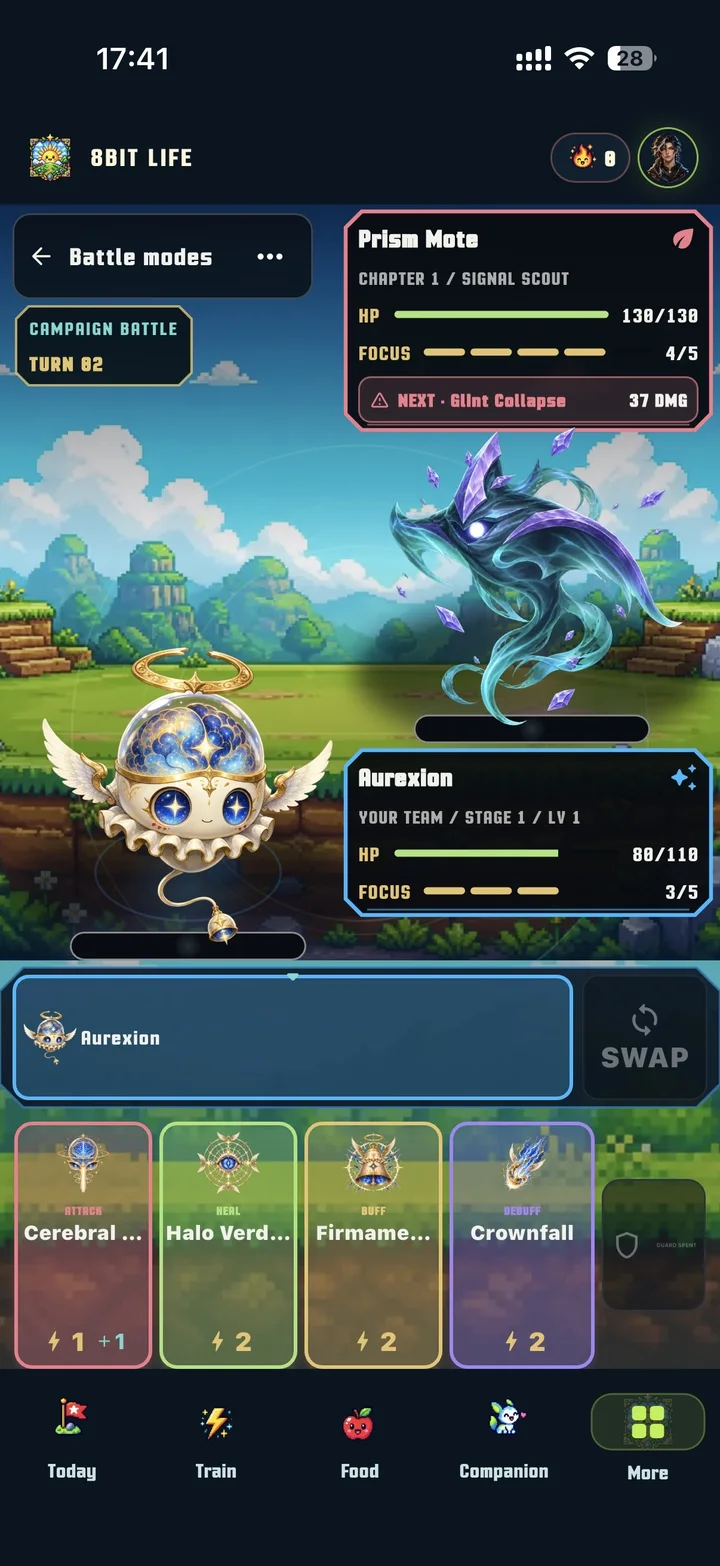
Enemy intent appears before the player acts. That creates a useful decision — attack, heal, buff, or debuff — without requiring a large set of controls.
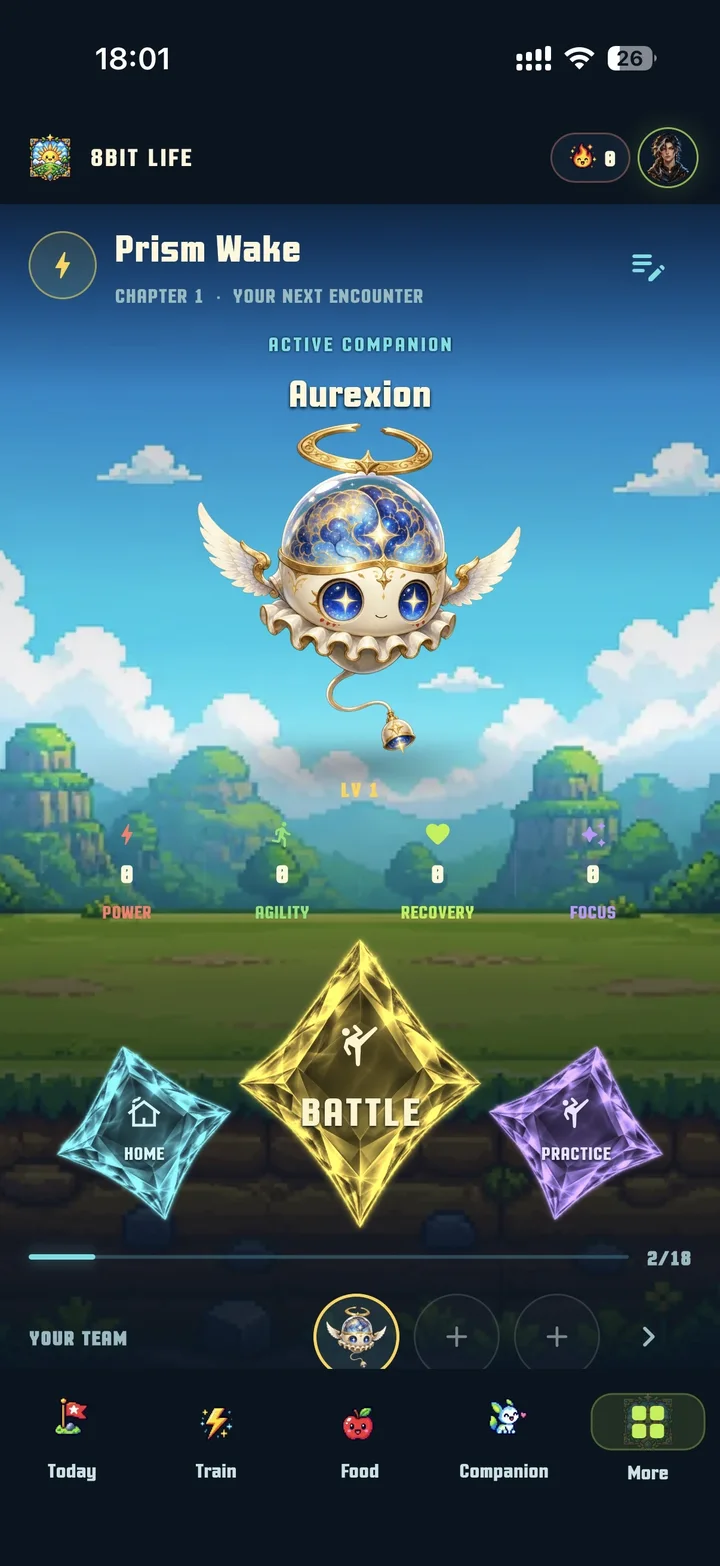
Choosing an active companion and team gives fitness-driven growth a use beyond cosmetic evolution. Stats and abilities affect how the player prepares for an encounter.
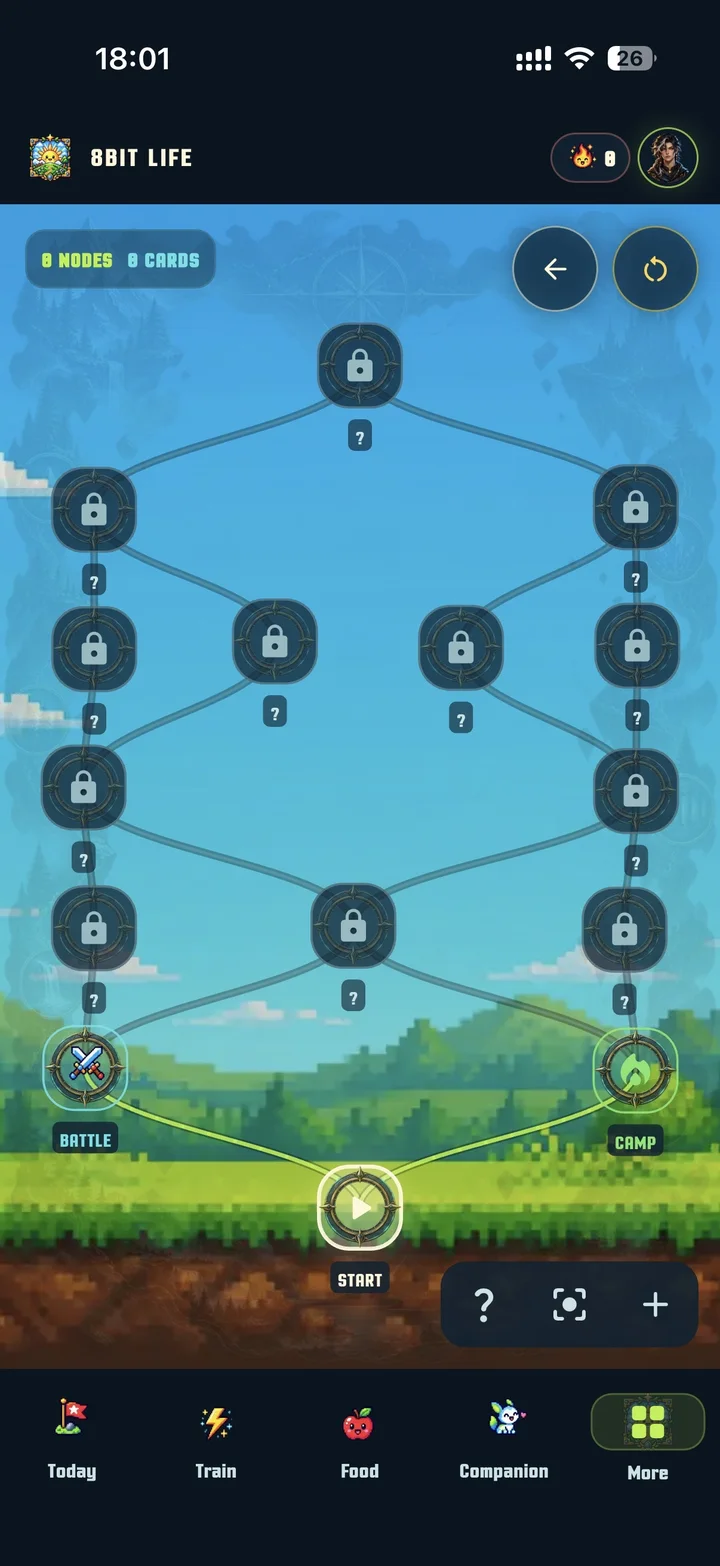
Branching routes turn the campaign into a sequence of short decisions between battles, camps, elite encounters, and bosses instead of one linear grind.
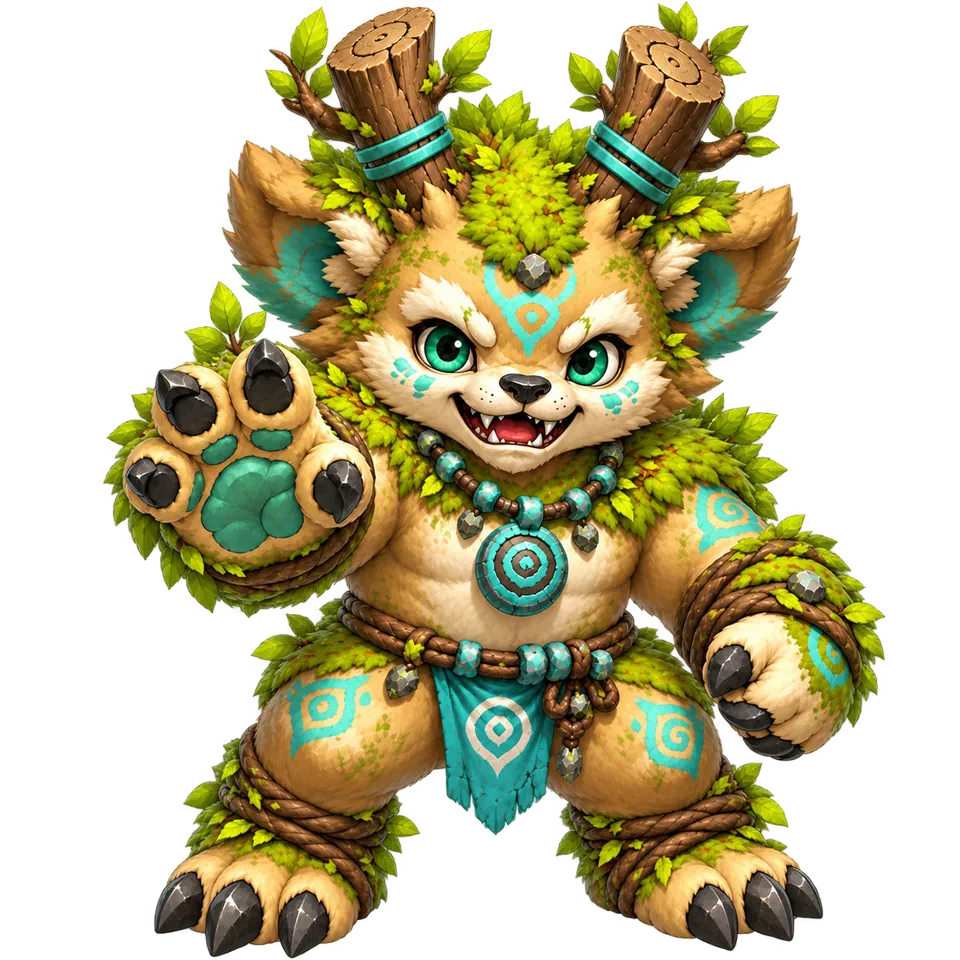

Train → develop → prepare → battle → progress. Fitness creates progression; the game gives it somewhere to go without sitting inside the workout itself.

RepQuest is the most complete product I have built so far. I designed the fitness experience, progression, and battle systems, then developed the iOS app in Flutter.
The hardest design problem was not adding game mechanics; it was deciding where they should stop. Keeping the fitness layer clear while giving the RPG enough depth became the main constraint across the product.